
Cats have a reputation for knocking things off counters and shelves. In fact, a quick search online will bring up many a video and comicstrip about cats breaking things by doing exactly this. This can be frustrating for any cat owner. Why do cats insist on breaking our knickknacks? Well, as with most pet behaviors, there are several different reasons your cat likes knocking things over.
Cats, even indoor only ones, have deeply ingrained predatory instincts. This is because they are considered to be "true" carnivores. In fact, cat toys such as wand toys, laser pointers, and kick sticks are fun for your cat because they are an outlet for these instincts. By knocking your pen around your desk they are trying to determine if the pen is potential prey. Cats will also explore their environment with not just their nose but their paws as well. So even things that don't even remotely look like a mouse or bug might get a perfunctory nudge from your cat.
Cats are smart—a lot smarter than some give them credit for. If cats aren't given proper mental stimulation they can quickly become bored. Many so-called "nuisance" behaviors can arise simply because your cat needs more stimulation. If your cat doesn't get stimulation through active play, he may start tearing up your furniture, climbing your drapes, and playing with things that aren't meant to be cat toys, such as things left laying around on counters.
A cat only needs to knock something off a counter a few times for them to realize that when they knock something over, their owner comes running. If your cat wants attention from you, they may start to knock things off counters to get your attention. In order to not reinforce this behavior, try not to immediately run over when your cat knocks something over. Obviously, if your cat breaks a coffee mug or knocks over a package of food, make sure they don't hurt themselves, but fallen pens and keys can be picked up later.
Since this behavior stems from a natural instinct, it's not recommended to scold your cat for knocking things over. That being said, there are several things you can do to help minimize your cat's destruction by knocking things off counters. Having scheduled play times, especially with toys that utilize their predatory instincts, like wand toys and kick sticks, can help stave off boredom. These toys offer an appropriate outlet for your cat's instincts and provide mental and physical enrichment. Making sure you play with your cat on a regular basis can help break them of their fascination with knocking things off counters. It's important that this playtime is more than just a few minutes, though. Most cats will benefit from 20 minutes of active play each day. In addition to scheduled playtime, redirection can also help. If you see your cat getting ready to jump onto a counter or table that has things on it they may want to knock over, you can distract them with an impromptu play session.
Another way to keep your cat interested in their toys and not your stray pens is toy rotation. It's important to provide your cat with a variety of toys to play with, but it's equally important to rotate those toys so they don't get bored with them. To rotate your cat's toys, you simply need to keep half of them in a plastic storage tote with some dried catnip sprinkled on them. Each week, collect all the toys that are out and swap them for the toys in the storage tote.
Finally, puzzle feeders can be a good tool to utilize as well. If your cat is already knocking things off of your countertops, utilizing puzzle feeders, especially the kind that get knocked around so that the kibble can fall out, can be a good outlet for them. You can also minimize their instinct to knock things over by minimizing their access to things. If you like to keep knickknacks out on display, keep them in an enclosed curio cabinet or on high shelves that your cat can't reach.
You can't stop your cat from instinctively pawing at things. However, if you understand why they are compelled to do so, you can give them appropriate outlets for this behavior.

What to Do if Your Cat Is Snoring
Cat snoring can happen for several reasons. Find out if your cat's snoring is normal or caused by a medical issue. Know when to call the vet about your cat snoring.
Turkish Angora: Cat Breed Profile, Characteristics & Care
The elegant and silky Turkish Angora cat is a playful, affectionate, and sometimes mischievous pet. Learn about the Turkish Angora breed.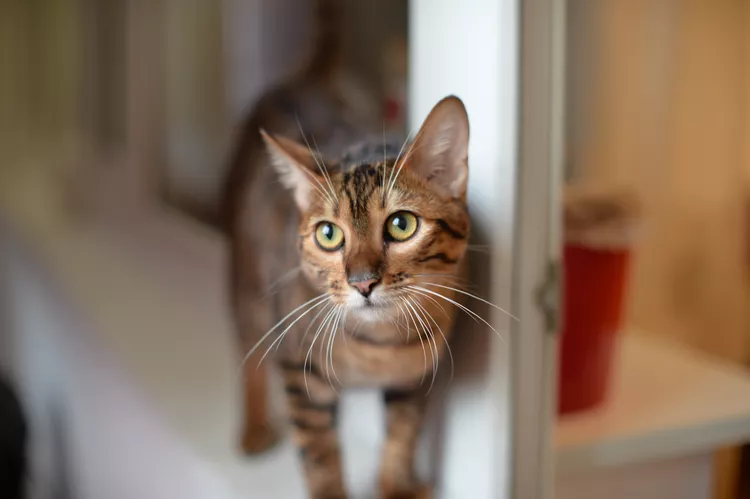
Toyger: Cat Breed Profile, Characteristics & Care
The toyger (toy tiger) cat is a beautiful, rare breed with an easygoing demeanor. These cats are hard to come by but make excellent pets.
Donskoy: Cat Breed Profile, Characteristics & Care
Donsky cat, or Don Sphynx, is a hairless cat that's known for being affectionate, social, and remarkably intelligent. Learn more about the Donsky cat breed.
Japanese Bobtail: Cat Breed Profile, Characteristics & Care
The Japanese bobtail is recognized for its bunny-like tail and is loved for its friendly, playful personality. Learn about the Japanese bobtail breed.
How to Stop Cat Aggression After a Vet Visit
Cats are usually out of sorts and ornery after a trip to the veterinarian. Learn how to stop cat aggression by planning ahead with these tips.
Why Do Cats Like High Places?
Does your cat like to hang out on top of tall furniture? Here's why cats like high places.
Rectal Prolapse in Dogs
Rectal prolapse in a dog can be an alarming thing to see. Find out why this happens, how to prevent it, and how to heal dog prolapse at home.
Is Acetaminophen Safe for Dogs?
Acetaminophen is used by humans for pain and fever relief, but is it safe for dogs? Here's what you need to know before giving your dog acetaminophen.
Dog Broken Toe: Signs and Treatment
Dogs can break their toes for several reasons. Find out how to tell if your dog has a broken toe. Learn what you need to do and what restrictions your dog may have to let a broken toe heal.
Tetanus in Dogs
Tetanus is an infection caused by bacteria found in soil. It can cause severe symptoms in dogs and even lead to death if not treated promptly.
Swedish Vallhund: Dog Breed Characteristics & Care
The Swedish vallhund makes for a high-energy and affectionate companion. Learn about the breed's history, health, exercise needs, and more.
Afghan Hound: Dog Breed Characteristics & Care
The Afghan hound is a majestic dog breed, known for its luxurious long coat and sweet personality. Learn about cost, care, and training needs.
Irish Setter (Red Setter): Dog Breed Characteristics & Care
The Irish setter, also known as the red setter, stands out from the crowd with their striking red coat and athletic nature. Learn about this gentle and affectionate dog breed.
Clumber Spaniel: Dog Breed Characteristics & Care
The Clumber spaniel is a friendly, calm dog and a great family pet who gets along with kids. Just beware of this rare breed's shedding and drool.
Reasons Why Dogs Grind Their Teeth
Some dogs grind their teeth. Learn why dogs grind their teeth and if it can be harmful. Find out what to do about teeth grinding in dogs.
Therapy Dog Certification: A Complete Guide in 6 Steps
Could your dog be trained to serve as a therapy dog? Here's how you and your dog can become an official animal-assisted therapy team.
Here’s How to Stop Your Dog from Jumping on You When Excited
Although it can be cute the first few times your dog jumps on you, it can quickly turn into a bad habit, especially if your pooch starts jumping on strangers. Here’s how to stop your dog from jumping on you when excited.
Why Do Dogs Howl at Sirens?
Howling at sirens is something that dogs are well known for, but why do some dogs do it while others seem unbothered?
How to Train a Labrador Retriever
Proper training is an essential part of owning a Labrador retriever. These smart dogs can be trained to be service dogs, hunters, and excellent companions.